

Why Subcutaneous Biologics Fail After Injection
When a biologic is administered intravenously, the molecule immediately enters systemic circulation. Subcutaneous biologics, however, face a series of barriers between the injection site and the bloodstream. For large molecules such as monoclonal antibodies designed for subcutaneous delivery, only a fraction of the injected dose may ultimately reach systemic circulation, with bioavailability often ranging between 50% and 90%.
The question is simple: what happens to the missing drug?
The answer lies within the unique environment of the subcutaneous space, where a number of processes can prevent a molecule from successfully reaching circulation.
Aggregation Risk
One of the most significant risks facing biologics after subcutaneous injection is protein aggregation. Although a formulation may appear stable in the vial, the conditions encountered after injection are very different. As excipients diffuse away and the formulation mixes with the surrounding tissue environment, changes in concentration, pH, ionic strength, and interactions with extracellular matrix components can promote protein-protein interactions and aggregate formation.
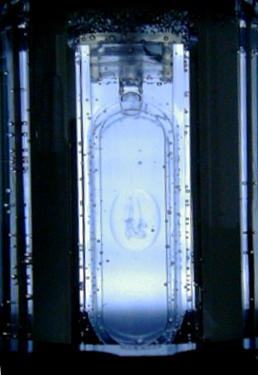
Aggregation can directly impact absorption by increasing the size of protein species and reducing their ability to move through the tissue and enter lymphatic vessels. This can lead to prolonged retention at the injection site and reduce the amount of drug reaching systemic circulation.
Importantly, aggregation is not only an absorption concern but also a potential immunogenicity risk. Unlike intravenous administration, subcutaneously injected proteins remain within a tissue environment rich in immune cells and lymphatic structures. Protein aggregates are more likely to be recognized by the immune system than native monomeric proteins, potentially increasing the risk of anti-drug antibody formation, altered pharmacokinetics, or reduced therapeutic efficacy. For this reason, understanding aggregation behavior under physiologically relevant SC conditions is a critical part of biologic formulation development.
Precipitation and Loss of Solubility
Some molecules remain soluble within their formulation but become less stable when exposed to the physiological conditions of the subcutaneous space.
As formulation excipients diffuse away from the injection depot, local conditions change rapidly. This can result in precipitation or phase separation, reducing the amount of soluble drug available for absorption. Once precipitated, the drug may dissolve only slowly or remain trapped within the tissue.
The Depot Becomes a Trap
The injection depot is intended to act as a temporary reservoir from which drug molecules are absorbed. However, not all depots behave equally.
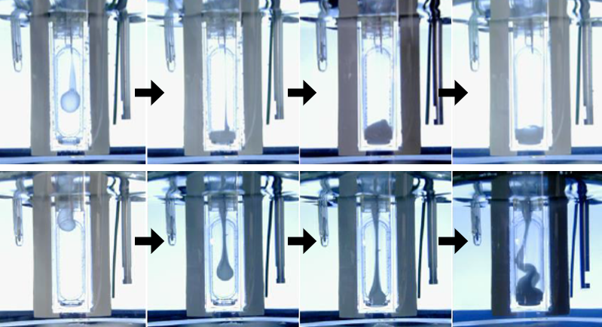
Highly concentrated formulations can create regions of elevated viscosity that slow molecular movement. Self-associated proteins may diffuse more slowly, while interactions with extracellular matrix components can further restrict transport. The result is prolonged retention within the depot and reduced absorption efficiency.
The Challenge of Lymphatic Uptake
Unlike small molecules, many biologics are too large to rapidly diffuse into blood capillaries and instead rely on lymphatic transport. Though, reaching the lymphatic system is not guaranteed.
Any factor that slows transport through the tissue, including aggregation, precipitation, self-association, or matrix interactions, can reduce lymphatic uptake and ultimately decrease bioavailability.
This is one reason why two formulations containing the same molecule can exhibit different clinical performance despite appearing similar in traditional analytical testing.
Local Degradation and Clearance
Not every molecule injected into the subcutaneous space survives long enough to be absorbed.
Proteolytic enzymes, immune cells, and other local clearance mechanisms can contribute to drug loss before systemic uptake occurs. Molecules retained at the injection site for longer periods may be particularly vulnerable to these pathways.
While the extent of degradation varies between molecules, it’s recognised as an important contributor to incomplete bioavailability for many biologics.
Understanding Failure Before It Happens
Historically, developers have relied heavily on animal studies and pharmacokinetic data to evaluate SC performance. However, we also know that over 90% of drugs that appear safe and effective in animals do not go on to receive FDA approval in humans predominantly due to safety and/or efficacy issues. These approaches often reveal that a problem exists without explaining why it occurred.
Understanding whether a molecule aggregates, precipitates or becomes trapped within the depot can provide valuable insight during formulation development.
As more high-concentration biologics, co-formulations, and IV-to-SC conversion programs enter development, identifying these risks early is becoming increasingly important.
Ultimately, many SC drugs do not fail because the molecule itself is ineffective. They fail because the journey from injection site to circulation is far more challenging than it first appears.
