

What is a UV-Vis spectrophotometer?
A UV-Vis spectrophotometer is an essential tool in pharmaceutical development and quality control laboratories. It plays a critical role in identifying and quantifying chromophore-absorbing substances in solution, ensuring precision and accuracy in both research and manufacturing processes.
How Does a UV-Vis Spectrophotometer Work?
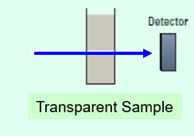
UV-Vis spectroscopy operates by passing electromagnetic energy through a sample. As this energy travels through the solution, the substance of interest absorbs a portion of the light within a specific wavelength range. The remaining light is then captured by a detector, which generates a unique absorbance spectrum for the sample.
The absorbance measurements obtained are compared to a calibration curve derived from known, traceable standards. This allows for accurate identification and quantification of the target substance within the sample.
It is important to note that for accurate results, the sample must be free of any undissolved particles, as the presence of such particles can cause light scattering, preventing accurate detection by the instrument.
Derivative Spectroscopy Analysis is a valid technique to solve the challenge of accurate measuring dynamic solubility samples with undissolved particles, in real-time as fast as every 5 seconds.
Our advanced Rainbow UV-Vis fiber optic probe dissolution monitoring system is widely trusted in pharmaceutical laboratories for its reliability and precision. Contact us today to learn more about how it can enhance your laboratory's performance and streamline your processes.
FAQs
What is a UV-Vis spectrophotometer used for?
A UV-Vis spectrophotometer is used to identify and quantify substances in solution that absorb ultraviolet or visible light. In pharmaceutical development and quality control, it is commonly used to measure concentration, monitor dissolution, evaluate solubility, and support other analytical workflows where accurate absorbance data is needed.
How does a UV-Vis spectrophotometer work?
A UV-Vis spectrophotometer passes ultraviolet and visible light through a sample and measures how much light is absorbed at specific wavelengths. The detector captures the remaining transmitted light and generates an absorbance spectrum, which can then be compared against a calibration curve to determine the concentration of the substance of interest.
What does UV-Vis spectroscopy measure?
UV-Vis spectroscopy measures the absorbance of UV or visible light by a sample across a defined wavelength range. This absorbance data can be used to identify chromophore-containing compounds and quantify their concentration in solution.
What types of samples can be analyzed with a UV-Vis spectrophotometer?
UV-Vis spectrophotometers are typically used to analyze liquid samples containing compounds that absorb UV or visible light. In pharmaceutical applications, they are often used for dissolution samples, solubility studies, formulation experiments, and quality control testing.
Why do undissolved particles interfere with UV-Vis measurements?
Undissolved particles can scatter incoming light before it reaches the detector. This scattering can distort the absorbance signal and reduce measurement accuracy, which is why traditional UV-Vis analysis often requires clear samples or filtration before testing.
Can UV-Vis be used for dissolution testing?
Yes. UV-Vis spectroscopy is widely used in dissolution testing to measure drug concentration over time. In fiber optic UV-Vis dissolution systems, probes can be placed directly in the dissolution vessel to support in situ, real-time monitoring without manual sampling.
What are the advantages of fiber optic UV-Vis spectrophotometry?
Fiber optic UV-Vis systems can support real-time, in situ monitoring of dissolution and solubility experiments while reducing manual sampling and sample handling. They can also improve data collection frequency and help streamline kinetic experiments where timing and sample integrity are important.
What is the difference between traditional UV-Vis analysis and in situ UV-Vis monitoring?
Traditional UV-Vis analysis often requires removing a sample from the experiment, filtering it, and transferring it to a separate instrument for measurement. In situ UV-Vis monitoring uses fiber optic probes placed directly in the experimental vessel, allowing continuous measurement in real time without removing the sample.
Is UV-Vis spectroscopy suitable for kinetic solubility or precipitation studies?
Yes. UV-Vis spectroscopy can be used in kinetic solubility, dissolution, and precipitation studies, especially when paired with in situ fiber optic probes. This approach helps researchers monitor dynamic changes in concentration throughout the experiment without relying on repeated offline sampling.
How is concentration determined with a UV-Vis spectrophotometer?
Concentration is typically determined by comparing the sample’s measured absorbance to a calibration curve generated from standards of known concentration. This allows the analyst to quantify the amount of the target substance present in the sample.
What industries use UV-Vis spectrophotometers?
UV-Vis spectrophotometers are used across pharmaceutical, biotech, chemical, academic, and quality control laboratories. In the pharmaceutical industry, they are especially valuable for formulation development, dissolution testing, solubility analysis, and routine QC testing.
When should a lab use a fiber optic UV-Vis dissolution system instead of offline sampling?
A fiber optic UV-Vis dissolution system may be a better fit when a lab needs real-time concentration data, more frequent sampling intervals, less manual sample handling, or a more efficient way to monitor dissolution and solubility experiments directly in the vessel.
